A year has passed, and it feels like an eternity
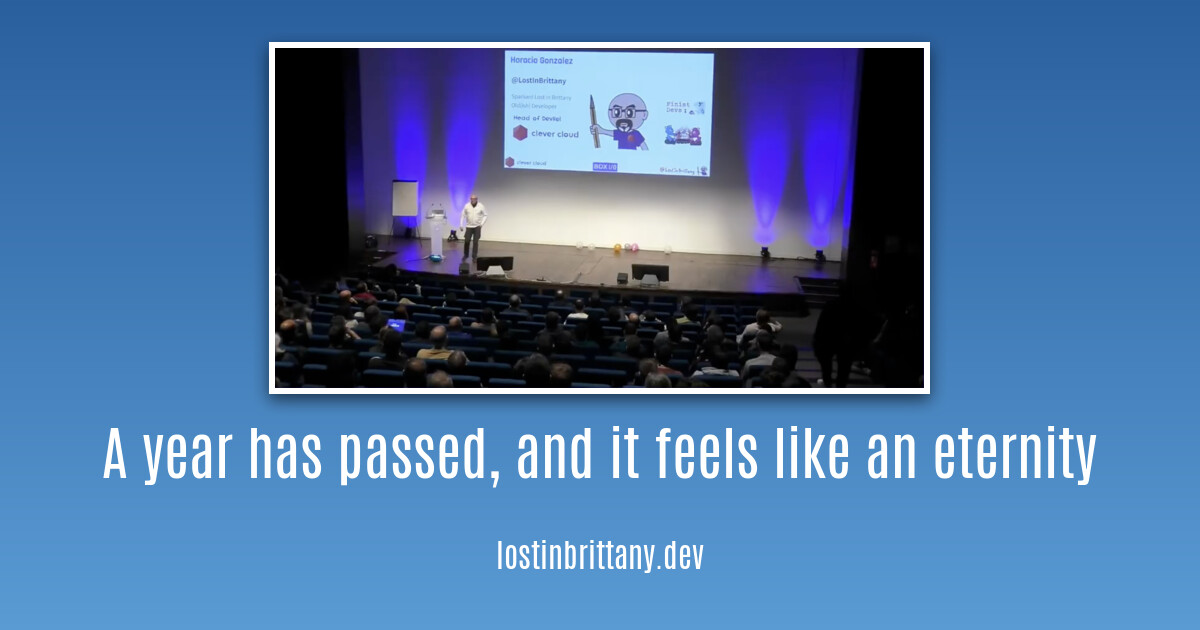
This week, I'm going back to BDX I/O, in Bordeaux. I have two talks to give, lots of people I want to see again, and quite a few things on my mind.
Last year, I talked there about the future of the developer's job. About the arrival of LLMs, what they were changing in the way we work, and the question that kept coming up everywhere: will we still need developers?
To step back a little, I told the story of the other revolutions our profession had already gone through. Compilers, terminals, high-level languages, all those things that had already announced, in their day, the end of programmers.
And I told my father's stories.
He used to tell me about the arrival of terminals in the seventies. About the time when developers, or rather analyst-programmers, wrote their code on paper before other people typed it in. About those who took it very, very badly when they had to type their own code. "A secretary's job."
He also told me about the resistance to languages like Fortran or COBOL, "too simple", "too close to English" or "not efficient enough", from people who had learned to program in assembly.
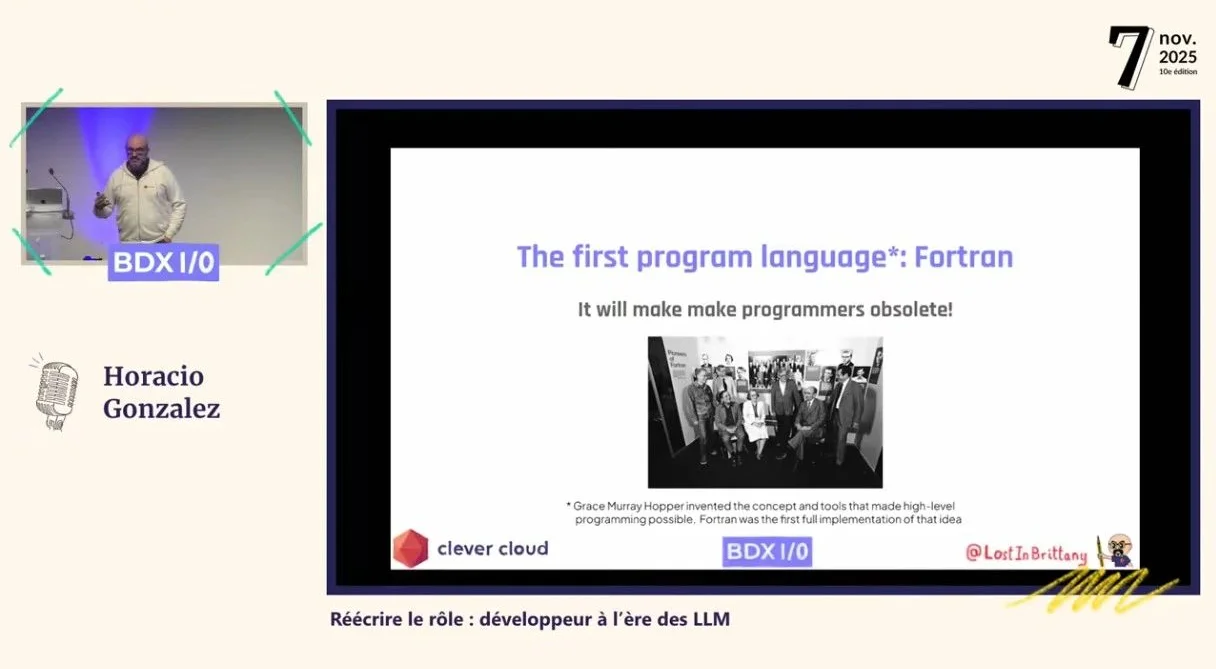
I loved those stories. First of all because it was my father telling them. And because, listening to some of the conversations around AI, I sometimes felt I was hearing them again, with a different vocabulary.
After the talk, I took that reflection further in a series of six articles, Rewriting the Role. I reread them while preparing this return to Bordeaux.
It's funny to reread all that almost a year later.
A year has passed, and it feels like an eternity for the dev world.
I don't think I was that far off the mark. The shift in our work, from writing code towards expressing intent, design, verification, I saw it coming. The questions about learning, about what experience becomes when the machine can produce the code, I was already asking them.
But even seeing the direction, I hadn't grasped how brutal the change would be.
Today, I still develop, without typing code.
And I'm still having a blast. Maybe more than ever. I still have that urge to create things on my computer, to start from an idea, to figure out how to make it work, to watch something appear that didn't exist a few hours earlier. I spend a lot less time typing, but I still feel like a developer.
And then there's what I see around me.
At Clever Cloud, I work with some of the best developers I have ever known. People whose knowledge, experience and understanding of the systems they work on I deeply admire. I've watched them embrace this change, experiment, and together pull off something that would have seemed unthinkable to me a year earlier.
Replacing, in barely four months, the whole set of legacy APIs built up bit by bit over fifteen years.
The heart of the reactor, as we say in French. Replaced while the reactor kept running.
Honestly, I'm still amazed every time I think about it.
But I also see fellow developers for whom this period is painful.
People who love writing code. Who love looking for an implementation, working on it, finding the right way to express an idea in a language. For whom writing that code is a big part of the joy of their job.
When they say AI has stolen what they loved about their work, I hear them.
I can tell the story of every previous revolution, explain that the job goes on, that the skills shift. That doesn't make what they feel any less real. And my enthusiasm doesn't give them back the joy they feel they're losing.
There's a kind of grief in that. For a way of working, and maybe also for a way of recognising yourself in your job.
Today, my father's stories make me think differently. I understand better those who took those changes badly. When you've spent years learning and loving a way of doing things, watching it disappear can hurt, even if what comes next opens up a world of possibilities.
And that word, grief, hits me hard right now.
A year has passed, and it feels like an eternity for my life too.
My father died suddenly in February.
He was my inspiration for that talk, but also my inspiration for becoming a developer, and for so many other things in my life. I'm still struggling to grieve him.
On Friday, after BDX I/O, I'm leaving for Spain to lay his ashes in his parents' family vault, in Asturias.
So coming back to Bordeaux, back to the conference where I told his stories last year, of course it stirs something in me.
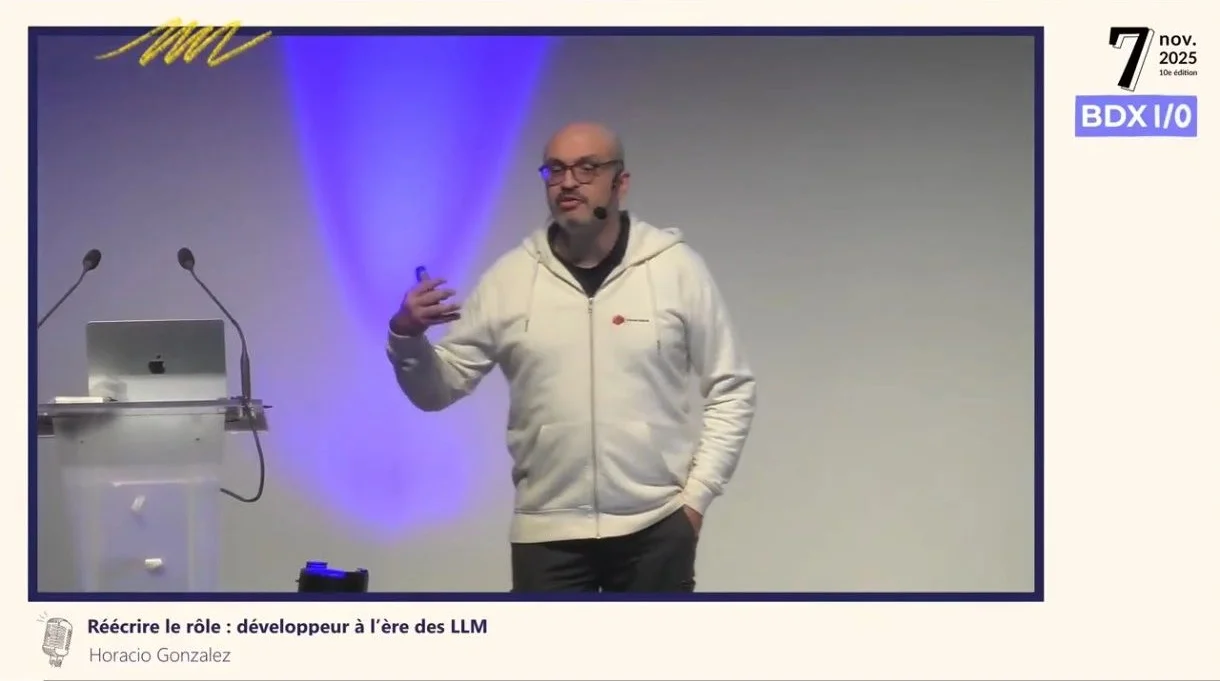
I don't put these losses on the same level. But they cross paths in my head this week. They also change the way I listen to people who tell me about what they miss.
And yet, with all that, I want this post to be about hope too. Because that enthusiasm for what's coming is still there in me.
Maybe it's partly generational. I grew up in the eighties and early nineties, with a relationship to the future in which science and progress were mostly promises. We were going to find solutions. We were going to discover extraordinary things. The singularity, in my imagination, had something fascinating about it.
Of course, there was already Terminator. Then The Matrix came along. I know those stories too.
But I've always wanted to believe we could head towards a Star Trek kind of world instead. A world where we'd have left most material scarcity behind, where a more united humanity would have defeated some of its demons, and could devote its energy to exploring, to understanding, to spreading out among the stars.
Yes, put like that, it may sound a bit dreamy. That suits me fine.
I don't know what future we're going to build. I see the reasons to worry. I also see talented people creating things that would have been out of their reach a year ago, and I feel that joy myself, of being able to bring more ideas to life.
It makes me want to keep going. To develop, to learn, to share what I discover. And to take seriously what this transformation is putting others through, even when their experience is very different from mine.
This week, I'll be meeting developers in Bordeaux and talking about MCP servers and cloud architecture. Then I'll take the road to Asturias with my father's ashes.
I wish I could have told him all of this. What we're able to build now, the things that surprise me, the ones that make me think. I wish I could have heard what he thought of it.
A year has passed, and it feels like an eternity.
And I still want to see what comes next.