Hi, I'm Horacio Gonzalez — VP of DevRel at Clever Cloud, international speaker, and Spaniard lost in Brittany.
I write about web development, Web Components, AI, Kubernetes and the cloud — in English, French and Spanish.
Jack looks for a job: a point-and-click game born on a train

Yesterday, 18 October, my daughter Anna and I were on a TGV from Paris to Brest, coming back to Brittany after a family weekend. A few hours of train, my laptop, and Anna, who is 12, sitting next to me.
It wasn't our first game of the weekend. On the way there, from Brittany to Paris, we had already made one together on the TGV: a Temple Run style game, based on one of the LEGO sets we got on the TGV. So for the way back, Anna wanted a game too, but a different kind: no combat, no arcade mode, something more about thinking. I thought of the old LucasArts point-and-clicks, and then of my colleague Erwan's project, Web-SCUMM. It was the ideal occasion to finally try it.
I should have been rehearsing

It's the morning before my talk at Confitura, in Warsaw. The slides are done. What I wanted to do this morning was simple: listen to some parts of my talk read aloud, to check my English pronunciation.
Let me explain. I'm a Spaniard lost in Brittany. I have an accent in every language I speak, and English is always a bit of a challenge. Before a talk, hearing the tricky sentences said by someone else helps me a lot.
Why I created r/SovereignIT
I have been working around technological sovereignty for years now – six of them at OVHcloud, and since then at Clever Cloud, where I am VP DevRel. For most of that time, raising the subject in a technical conversation produced one of two reactions: polite boredom, or the assumption that I was making a political argument. Sovereignty was a word for ministries and industrial policy papers. It did not seem to belong in a discussion about where you deploy your application.
That has changed, and not because anyone won the argument.
Why I do DevRel and why I intend to keep doing it
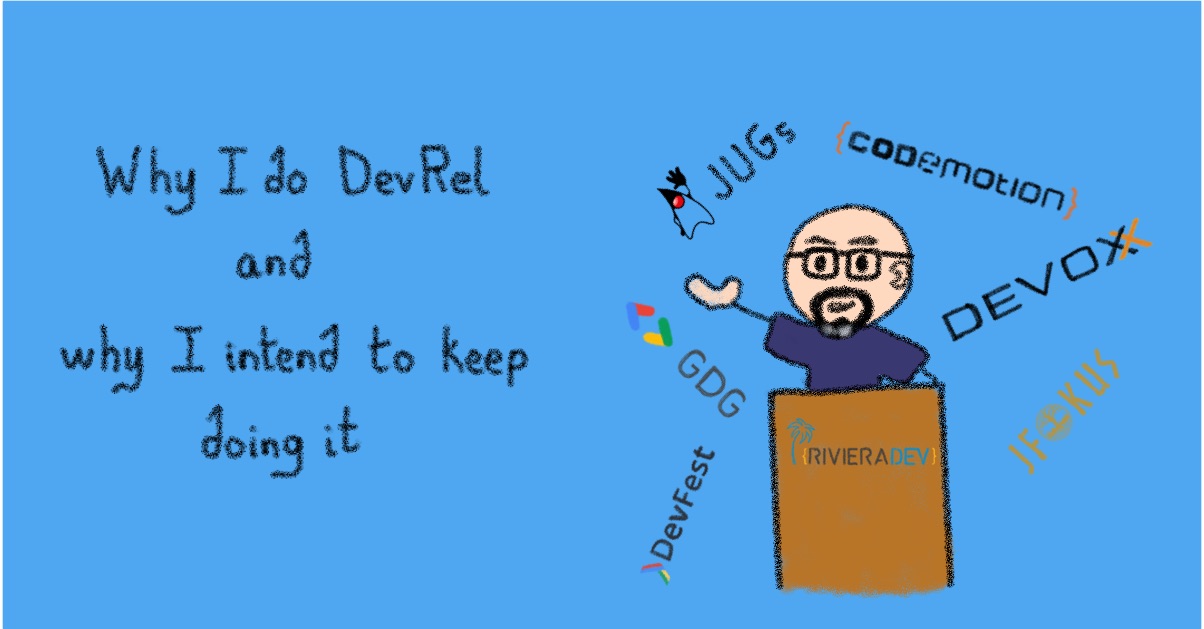
Thierry asked himself, publicly, whether DevRel was still une bonne situation. I have been asking myself the same question, on and off, since 2018.
I also read Salma Alam-Naylor's post, the one where she announces she is leaving DevRel and public life, for good, probably. The burnout, the physical toll, having to justify your work over and over, AI quietly killing the discovery channels that used to bring people to what we make. I have lived through most of these things myself. This text is not written from a comfortable, distant place.
Migrating 1156 WordPress Posts to Eleventy with Claude

Do you remember the golden age of the French blogosphere? Between roughly 2005 and 2012, there was a thriving community of French-language bloggers who all knew each other. People like Korben (one of the most iconic French tech bloggers, still going strong today) were getting started, blogrolls were a thing, bloggers met up IRL, commented on each other's posts. It was a different web.
For those unfamiliar with this era, imagine a time before social media had swallowed everything. Blogs were where conversations happened. You had your corner of the internet, people came to visit, left comments, and you'd visit theirs. It was decentralized, personal, and surprisingly tight-knit.
Why I'm Learning Rust in 2026
I learned just enough Rust a couple of years ago to nod along in conversations, read some code, feel vaguely guilty, and move on. I never actually used it.
And now, in 2026, I'm coming back to it on purpose.
Rewriting the role: Developers in the age of LLMs
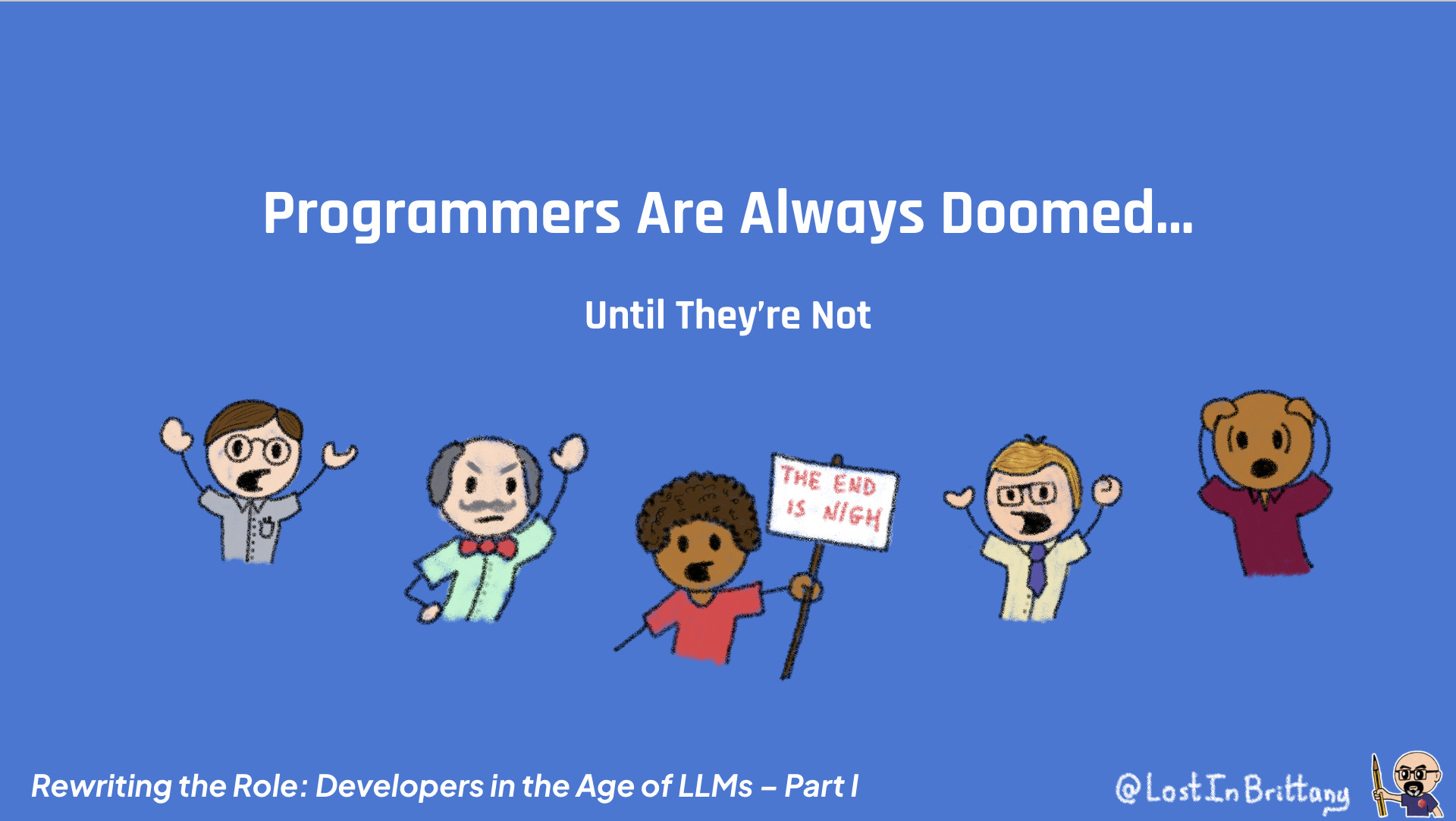
Every few decades, a new wave of abstraction reshapes how we build software, and each time, someone declares the developer obsolete. With LLMs, we hear it again. But what if that fear is missing the point?
Last November, after my talk at BDX I/O, I wrote a six-part series exploring how the developer's role is shifting, not disappearing, in the age of AI. Here's the full journey, with links to each part.
The Future Fits in Your Pocket: Running a Thinking Model on My Phone
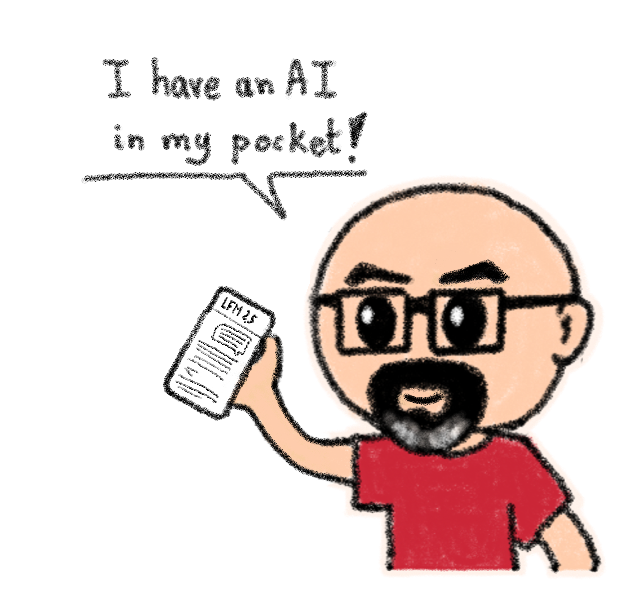
I've just had one of those rare moments where you glimpse the future - not as a concept, but running right there in your hand, generating tokens at a comfortable pace on a mid-range Android phone.
The model? LFM 2.5 700M Thinking. Under a gigabyte of RAM. Tens of tokens per second on my Motorola G55. And genuinely helpful.
Differently Human
The Future of Software Development
Rewriting the Role: Developers in the Age of LLMs: Part VI
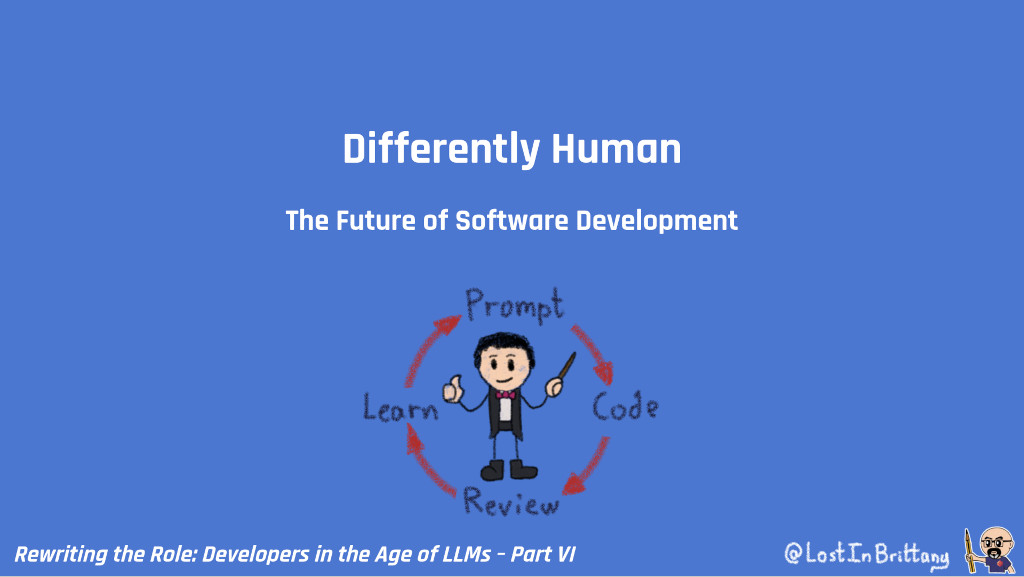
We began this series with a question about fear.
Teaching the next generation
Becoming a Developer in the Age of LLMs
Rewriting the Role: Developers in the Age of LLMs – Part V
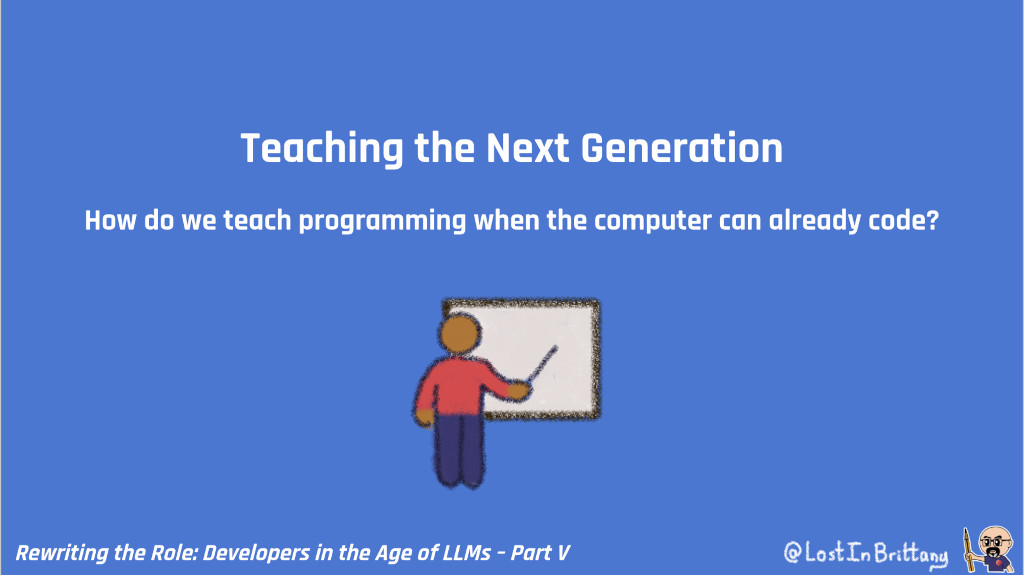
In the last post, we looked at how developers grow once they're already in the field: how juniors and seniors adapt to smarter tools and new forms of collaboration. But what about those who haven't written a single line yet? How do we teach programming in a world where autocomplete can build an app?
The Developer’s Journey
Growing Up with Smarter Tools
Rewriting the Role: Developers in the Age of LLMs – Part IV
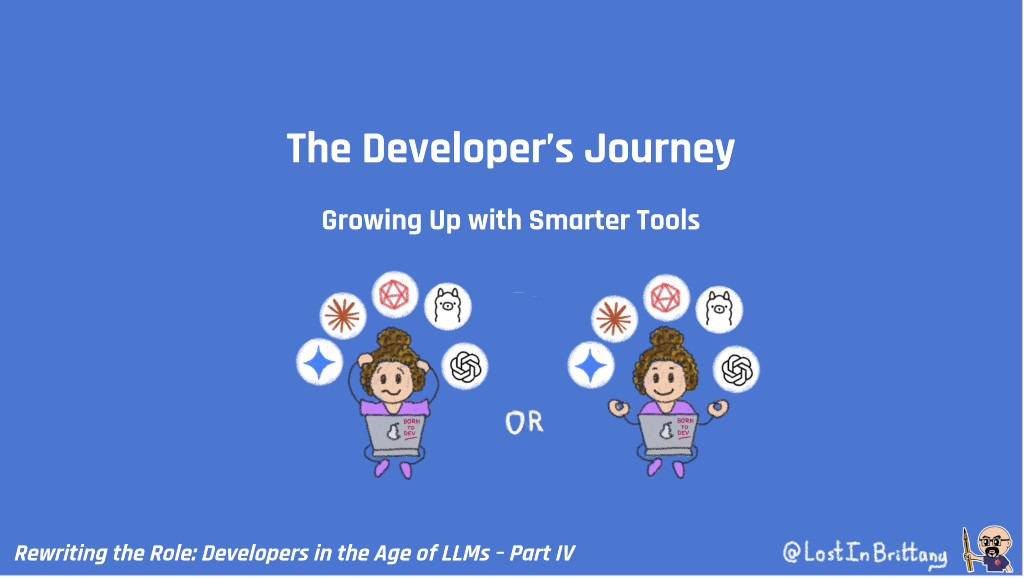
In the previous post, we explored how coding itself is changing, from syntax to intent, from typing to conducting. Now let’s talk about how we, as developers, grow in that new environment. Because while tools evolve fast, careers, mentorship, and professional growth still depend on something slower and deeper: learning to understand complexity.
Co-Authoring with the Machine
The Developer’s New Workflow in the Age of AI
Rewriting the Role: Developers in the Age of LLMs – Part III
In the first two parts of this series, we looked back at the long tradition of technological panic in software development, and how each wave of automation has shifted, not erased, the craft. Then we explored how the fear of “deskilling” misses the point: every time tools get smarter, developers reskill.
When Tools Learn, So Must We
Deskilling or Reskilling in the Age of AI
Rewriting the Role: Developers in the Age of LLMs – Part II
In the first part of this series, I looked back at the many times developers were declared obsolete. From Fortran to Java, from punched cards to low-code tools, every new abstraction seemed ready to kill programming, and every time we just moved one level up.
Programmers Are Always Doomed...
Until They’re Not
Rewriting the Role: Developers in the Age of LLMs – Part I
This article is the first in a series titled Rewriting the Role: Developers in the Age of LLMs, inspired by the talk I gave on November 7, 2025, at the BDX I/O conference in Bordeaux. The talk, and now this series, explores how the developer’s craft evolves when large language models start writing code beside us, and what remains profoundly human in that process.
Building Smarter MCP Servers — From Theory to Practice
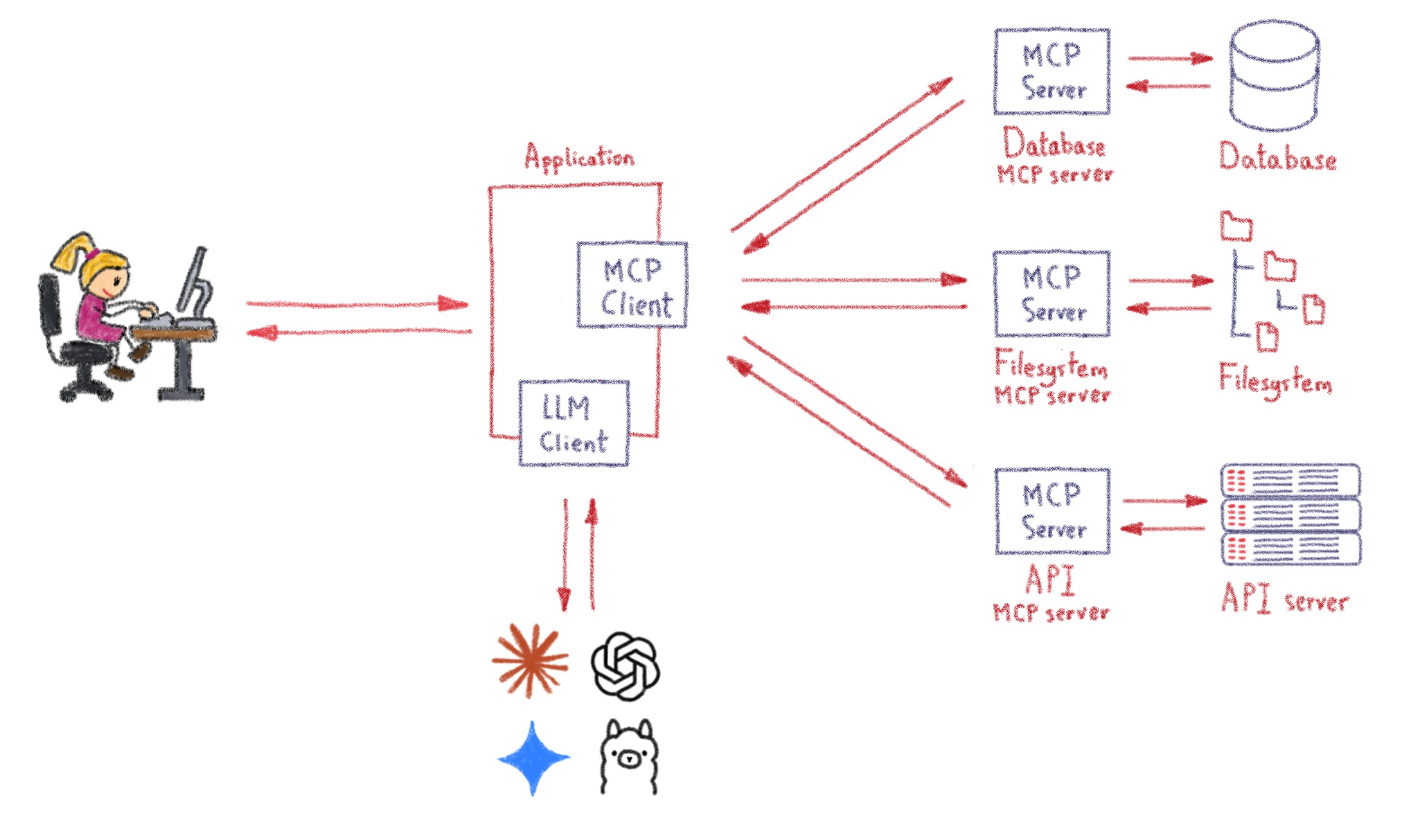
A few months ago, I published an article introducing MCP servers. Since then, I’ve had the chance to build several of them, experiment with different approaches, and present a talk on the subject at JUG Summer Camp.
That first article was about the what and the why of MCP. This one is a follow-up focused on the how: the practices, patterns, and lessons that make the difference between a brittle prototype and a server you can trust in production.
Understanding MCP servers: generic vs. domain-specific approaches
Introduction: MCP Servers as APIs for LLMs
MCP (Model Context Protocol) servers are to Large Language Models (LLMs) what REST APIs are to applications: structured, standardized ways to interact with external data sources and tools. Like APIs, MCP servers vary significantly in design, from highly generic and flexible solutions to specialized, domain-specific ones.
In this post, we’ll delve deeper into these two approaches—generic versus domain-specific—and explain how thoughtful MCP server design can dramatically improve the usability and efficiency of LLM-powered applications.
DevRel at Clever Cloud
What is DevRel?
Developer Relations (DevRel) is about building bridges between tech companies and developers. The goal is to help developers better understand, use, and get the most out of the tools available to them, while also ensuring that companies improve their products through real user feedback.
DevRel typically involves several key activities:
Under the hood
Why not simply use Wordpress?

Hello there, folks!
If you've been following my online adventures on LostInBrittany.org for the past couple of decades, you've seen it evolve from a mishmash of topics to a place where tech reigns supreme. I've used trusty old WordPress for this journey, running everything from my personal blog to corporate platforms like the current OVHcloud blog. Plus, I've set up countless blogs for friends, family, and various groups.
Hello world!
My blog is reborn... again...

Hello to everyone out there – tech enthusiasts, wanderers, artists, and those just plain curious!
If you ventured into the varied pages of LostInBrittany.org in the past, you'd remember a mix of topics – from tech to art, to even optical illusions. That blog was where I combined my love for drawing with the exciting world of digital technology. Over time, priorities shifted, and while the old platform never really went away, its primary focus evolved.